
CASE STUDY
AI-Assisted Rx Verification
Integrating computer vision into Walmart Pharmacy while preserving the confidence, safety, and operations pharmacists depend on every day.
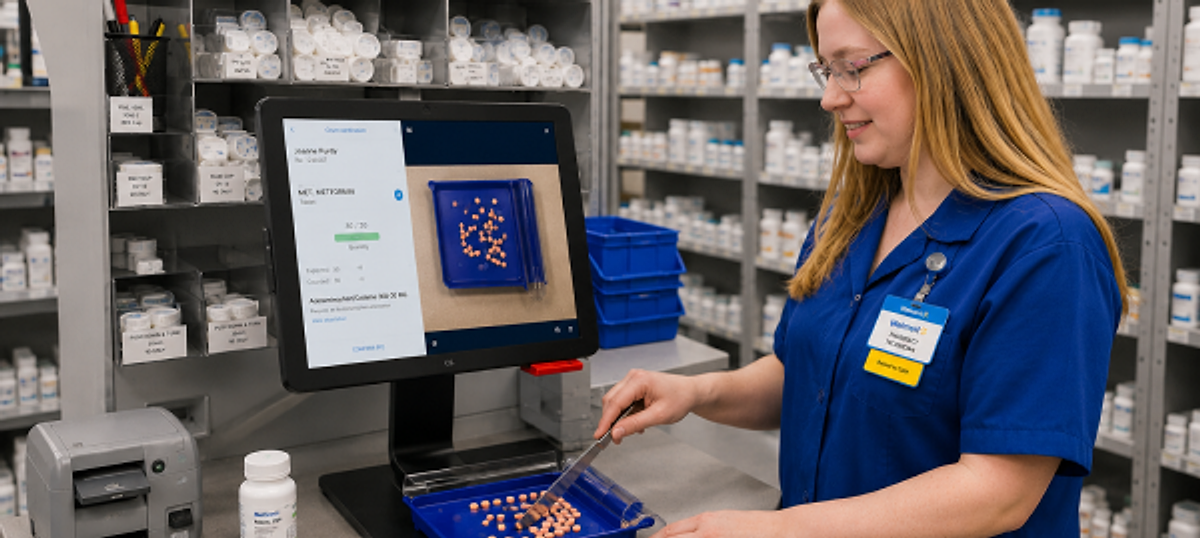
Role: Senior UX Product Designer
Organization: Walmart Health & Wellness
Platforms: RxOne, Connexus, Outcomes Rx
Disciplines: Workflow Design, Systems Integration, UX Strategy, Usability Testing, Visual Design, VQA
RESPONSIBILITIES
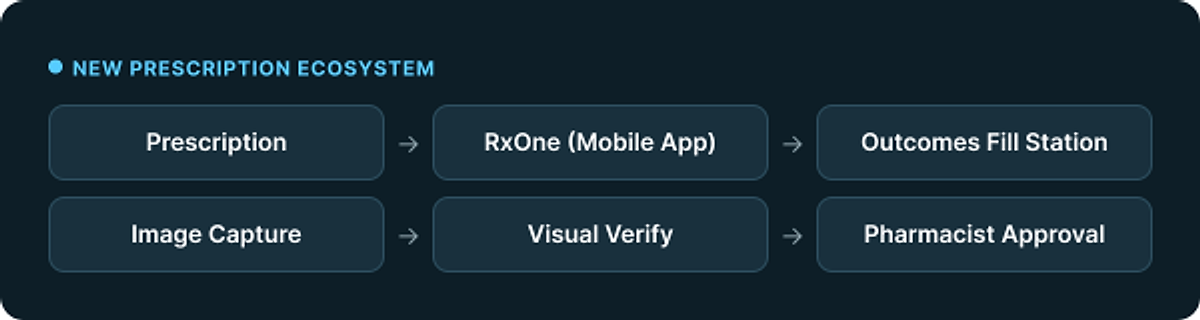
- Designed Walmart-owned workflows surrounding the Outcomes ecosystem
- Led RxOne workflow integration before image capture
- Co-designed the pharmacist-facing Visual Verify experience
- Conducted usability testing with pharmacy technicians and pharmacists
- Partnered directly with Outcomes on workflow integration and UI refinement
- Stayed on through implementation, VQA, rollout, and post-launch enhancements
OUTCOME
- Enabled computer-vision-assisted prescription fulfillment across most eligible Walmart pharmacies
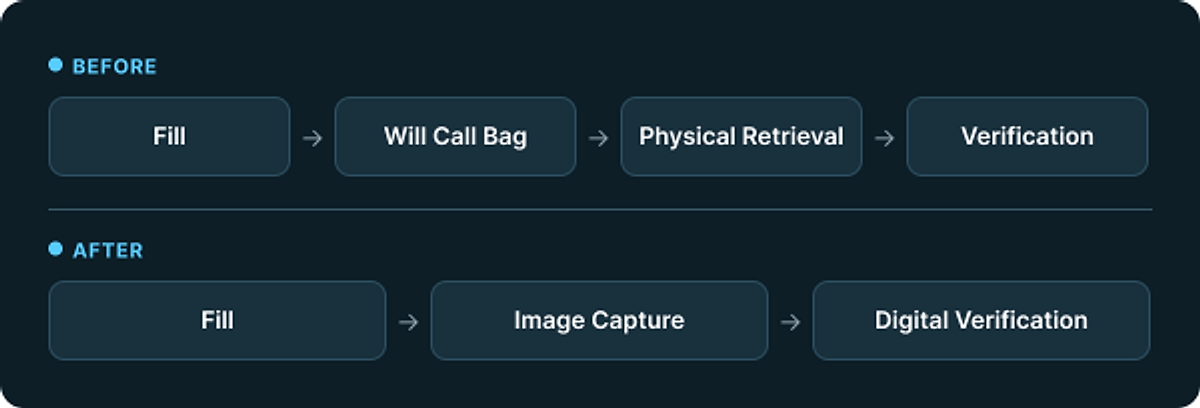
- Modeled a 41% time reduction in routine two-prescription visual-verification time by replacing physical retrieval with image-based review.
- Reduced reliance on physical prescription retrieval during pharmacist verification
- Introduced a new digital verification workflow while maintaining pharmacist oversight
- Supported continued rollout and investment in pharmacy automation initiatives
Overview
Pharmacists are among the most time-constrained professionals in healthcare. Every prescription must be verified. Every patient must be counseled when appropriate. Every technician workflow must be monitored. Every safety requirement must be upheld.
At the same time, pharmacists create the greatest value when they are helping patients directly—answering questions, providing guidance, administering services, and delivering healthcare expertise.
Walmart partnered with Outcomes Rx to introduce computer-vision-assisted prescription fulfillment across pharmacy operations. The technology could capture imagery throughout the filling process, creating an opportunity for pharmacists to review prescriptions digitally rather than retrieving physical will-call bags during routine verification.
Traditional filling relied almost entirely on technician accuracy and pharmacist review. Computer vision introduced an opportunity to automatically document the fill process, creating a new source of evidence for pharmacist verification while reducing effort.
The business opportunity was clear:
- Reduce operational effort
- Improve prescription throughput
- Give pharmacists time back for higher-value patient care
The technology generated excitement across the organization. The challenge was ensuring pharmacists trusted it enough to use it.
The challenge
At first glance, this appeared to be a computer vision project. In reality, it was a trust project.
Pharmacists were open to innovation, but they were not willing to compromise accuracy. Every verification decision carries responsibility, and any new workflow had to support the same level of confidence they had developed through years of practice.
If pharmacists couldn’t trust the evidence presented to them, the technology would fail regardless of how advanced the underlying computer vision system became.
The challenge was designing an experience that allowed pharmacists to quickly evaluate evidence, maintain confidence in their decisions, and adopt a fundamentally new verification model without sacrificing patient safety.
Complicating matters further, the verification experience lived inside a legacy pharmacy system. We were only allowed to redesign a limited portion of the interface while preserving the surrounding application and workflow.


